
Analyzing tiered reward structures shaping sustained participation in prize accumulation features on portable gaming applications within Britain's controlled entertainment market
Portable gaming applications operating in Britain's regulated entertainment sector have incorporated tiered reward structures that organize player progression through multiple levels, each granting incremental access to prize accumulation tools such as point multipliers, entry thresholds, and redemption options. These frameworks link sustained engagement directly to advancement criteria that include session frequency, volume of participation, and achievement of accumulation milestones within the application's controlled environment.
Data compiled as of May 2026 indicates that applications deploying four or more distinct tiers record higher average retention intervals compared with single-level systems, with participants advancing from entry tiers to mid-level status showing measurable increases in weekly interaction rates. Regulatory oversight from bodies outside the immediate jurisdiction, including guidelines referenced by the Canadian Centre for Gaming Research, highlights parallel patterns where structured progression encourages consistent activity without exceeding mandated participation caps.
Mechanics of tier progression and prize accumulation
Tier systems typically begin with a base level that grants limited access to daily accumulation tasks, while higher tiers unlock expanded prize pools, faster point conversion rates, and eligibility for larger cumulative rewards distributed through scheduled cycles. Advancement occurs through transparent metrics such as total points gathered over defined periods, with automatic recalculation at the close of each monthly window ensuring participants understand the pathway ahead. Prize accumulation features within these tiers allow users to bank credits toward future redemptions, creating a layered system where lower-tier activity feeds directly into eligibility for upper-tier benefits.
Researchers examining mobile platforms note that the spacing between tiers influences participation curves, with moderate gaps between levels correlating to steadier advancement rates across user cohorts. In contrast, overly compressed tier spacing produces quicker saturation followed by plateaus, while excessively wide gaps reduce motivation for continued accumulation once initial rewards are secured.
Participation patterns observed across user segments
Segmented analysis of user data reveals distinct trajectories among different demographic groups engaging with tiered structures. Younger adult cohorts demonstrate faster initial tier climbs driven by higher session density, whereas older participant groups maintain steadier progression through consistent but lower-volume activity that aligns with prize accumulation thresholds. These patterns hold across applications that integrate accumulation meters visible on the main interface, allowing real-time tracking of progress toward the next tier boundary.
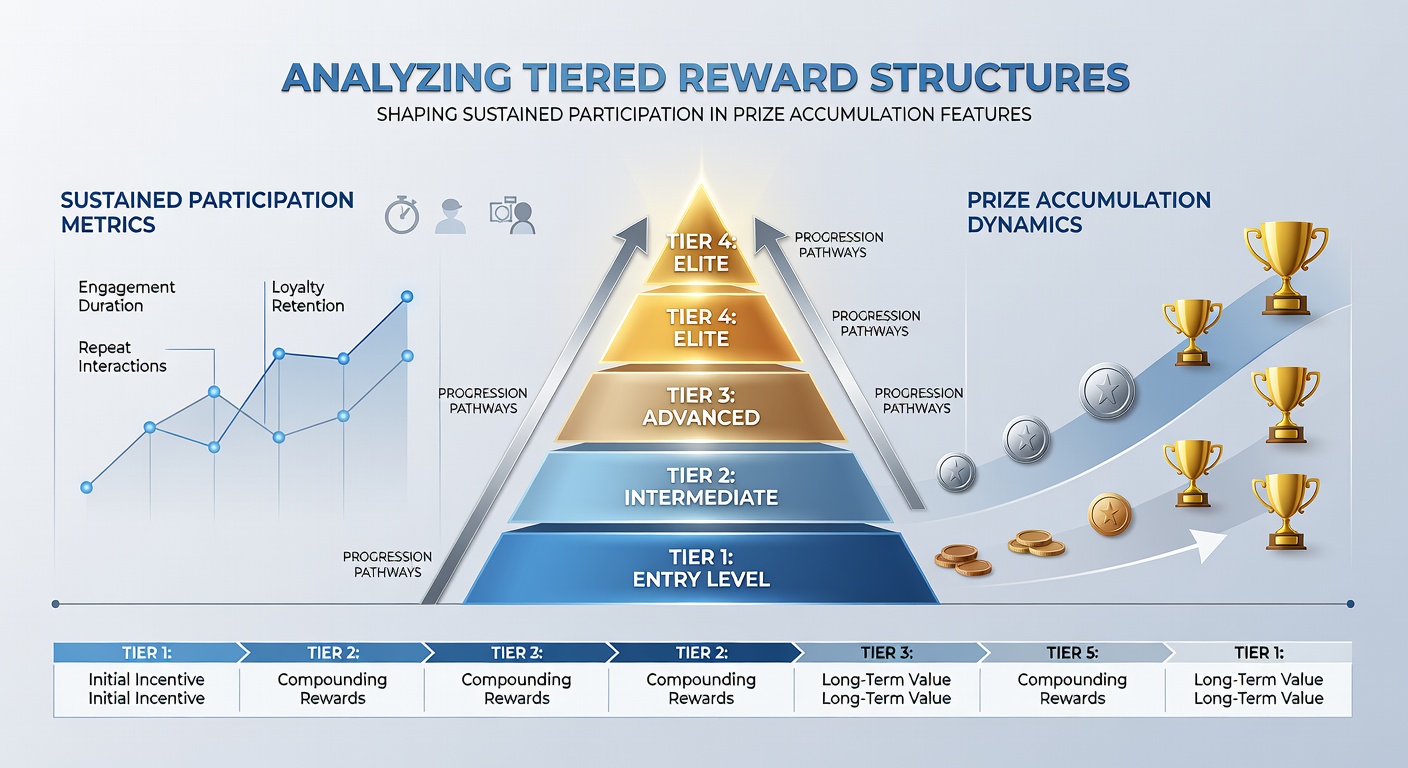
What's notable is how seasonal fluctuations in May 2026 affected accumulation velocity, with post-holiday periods showing temporary dips followed by renewed climbs as new tier cycles reset. Applications that adjusted accumulation targets seasonally maintained more stable participation across these transitions compared with those maintaining fixed yearly benchmarks.
Regulatory context and structural compliance
Britain's controlled entertainment framework requires that tiered rewards remain proportionate to actual participation levels, preventing disproportionate acceleration that could bypass accumulation safeguards. External reviews, such as those referenced in reports from the Australian Institute of Family Studies, examine comparable systems in other jurisdictions and identify design elements that support long-term engagement while respecting spending and time limits embedded in regulatory codes. Operators align tier benefits with these constraints by capping maximum accumulation rates per tier and publishing clear rules on how points translate into redeemable prizes.
Compliance documentation submitted in early 2026 shows that applications with publicly available tier progression tables experience fewer regulatory queries, as participants can independently verify advancement requirements. This transparency also supports data collection on how different tiers influence the distribution of accumulated prizes across the user base.
Conclusion
Tiered reward structures continue to define how prize accumulation operates within Britain's portable gaming applications, with measurable links between tier design and sustained participation metrics documented through 2026. The interaction of progression requirements, accumulation mechanics, and regulatory boundaries produces consistent patterns across platforms, where advancement criteria shape both short-term activity spikes and longer-term retention. Observers tracking these systems note ongoing refinements in tier spacing and reward scaling as operators respond to aggregated participation data while maintaining compliance with established market controls.