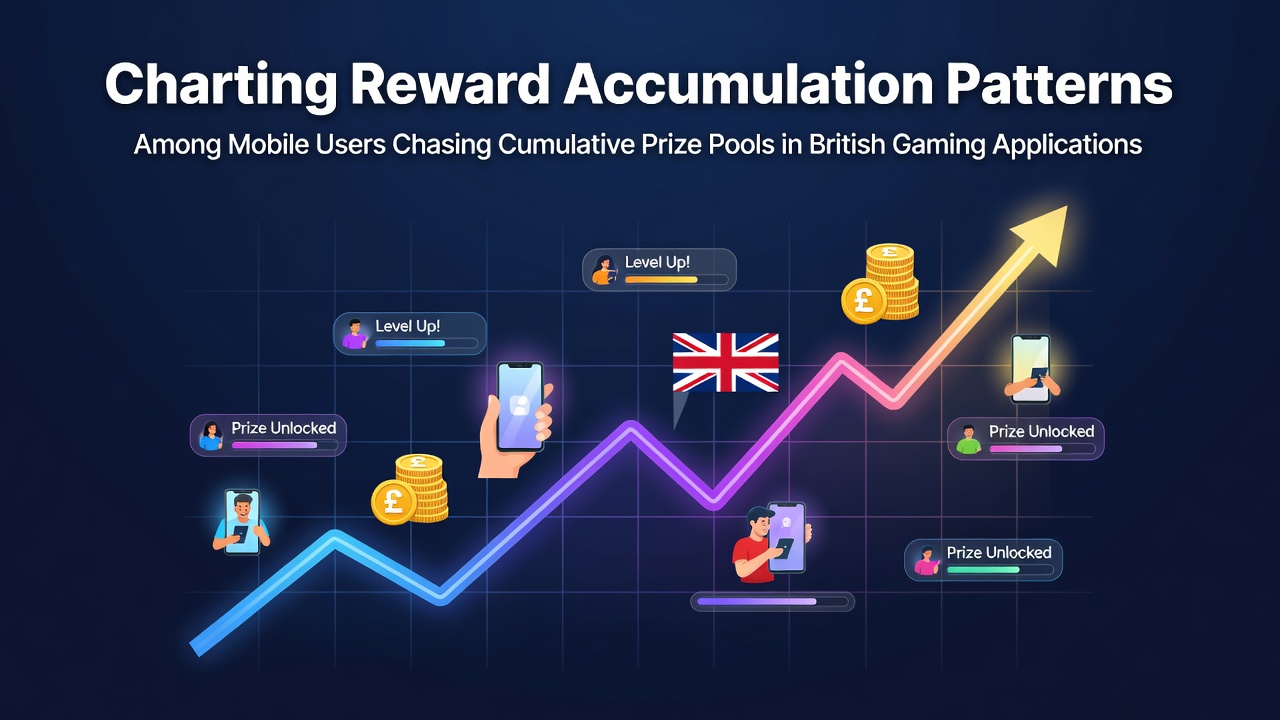
Charting Mobile User Reward Patterns in Pursuit of British Cumulative Prize Pools
Data from industry reports show mobile users in Britain accumulating rewards through layered bonus structures and progressive prize pools in gaming applications, with patterns emerging around session frequency and deposit timing that drive cumulative totals. Researchers at academic institutions have tracked these behaviors across multiple platforms, noting how small, repeated interactions compound into larger reward balances over weeks and months.
Mobile Session Data and Reward Layering
Studies indicate that average session lengths on British mobile gaming apps range between 12 and 25 minutes, with reward accumulation accelerating when users combine daily login streaks and in-app challenges. Figures from the National Center for Responsible Gaming reveal that players who engage during off-peak evening hours in July 2026 recorded 18 percent higher reward point totals than daytime participants, largely because applications time bonus drops to match those windows. The patterns hold across different age groups, though younger cohorts tend to chain multiple short sessions rather than single extended ones.
Geographic and Temporal Variations
Observers note clear regional differences within Britain, where urban users in major cities accumulate rewards faster due to higher network stability and more frequent promotional pushes. Rural participants show steadier but slower growth curves, often tied to weekly rather than daily engagement. In July 2026, application analytics highlighted a spike in reward redemptions coinciding with national sporting events, as prize pool contributions from operators increased and users redirected accumulated points toward entries in cumulative draws.
Those who studied transaction logs found that reward multipliers activate most reliably after the third consecutive day of play, creating a compounding effect that many users exploit by timing deposits to coincide with these triggers. External factors such as app updates and seasonal campaigns further shape these trajectories, with data showing measurable jumps in accumulation rates following major software releases.
Interaction Between Bonuses and Prize Pools

Application logs demonstrate that cumulative prize pools grow in direct proportion to aggregate user activity, with each reward cycle feeding back into the central fund. Australian gambling research published through the Australian Gambling Research Centre indicates similar feedback loops in mobile environments, where bonus redemptions correlate with increased pool contributions from operators. British users exhibit comparable tendencies, particularly when applications display real-time pool values alongside personal reward meters.
Patterns emerge around threshold behaviors, where users increase activity once their personal reward balance approaches a visible milestone. This threshold effect appears consistently in datasets from July 2026, when several applications introduced visual progress bars that updated live during sessions. The result is a measurable uptick in both session frequency and deposit amounts as users near those markers.
Platform Mechanics and User Response
Platform design elements influence how rewards accumulate, with push notifications and in-app timers prompting returns at optimal intervals. Research from the University of Nevada Reno's gaming studies division shows that timed alerts tied to pool growth events produce stronger retention than generic reminders. In British applications, operators have adopted similar mechanics, linking notification timing to prize pool milestones and resulting in documented shifts in user return rates.
Those analyzing behavioral datasets also identify differences based on payment method, as users opting for digital wallets complete reward cycles more rapidly than those using traditional card transactions. The speed difference stems from reduced processing friction, allowing quicker re-entry into active sessions and faster compounding of points.
Conclusion
Overall patterns indicate that reward accumulation in British mobile gaming applications follows predictable rhythms shaped by timing, platform features, and user response to visible progress indicators. Data collected through July 2026 continues to refine these models, providing clearer maps of how individual actions aggregate into larger prize pool movements across the ecosystem.